
Pearl oysters-
Pearl oysters are not closely related to true oysters, being members of a distinct family, the feathered oysters (Pteriidae. Both cultured pearls and natural pearls can be obtained from pearl oysters, though other molluscs, such as the freshwater mussels, also yield pearls of commercial value.
The largest pearl-bearing oyster is the marine Pinctada maxima, which is roughly the size of a dinner plate. Not all individual oysters produce pearls naturally. In fact, in a harvest of three tons of oysters, only three to four oysters produce perfect pearls.
In nature, pearl oysters produce pearls by covering a minute invading parasite with nacre. Over the years, the irritating object is covered with enough layers of nacre to become a pearl. The many different types, colours and shapes of pearls depend on the natural pigment of the nacre, and the shape of the original irritant.
Pearl farmers can culture a pearl by placing a nucleus, usually a piece of polished mussel shell, inside the oyster. In three to six years, the oyster can produce a perfect pearl. These pearls are not as valuable as natural pearls, but look exactly the same. In fact, since the beginning of the 20th century, when several researchers discovered how to produce artificial pearls, the cultured pearl market has far outgrown the natural pearl market.
Anatomy-
Oysters are filter feeders, drawing water in over their gills through the beating of cilia. Suspended plankton and particles are trapped in the mucus of a gill, and from there are transported to the mouth, where they are eaten, digested, and expelled as feces or pseudofaeces. Oysters feed most actively at temperatures above 10°C (50°F). An oyster can filter up to 5 l (1.3 US gal) of water per hour. Chesapeake Bay's once-flourishing oyster population historically filtered excess nutrients from the estuary's entire water volume every three to four days. Today, that would take nearly a year. Excess sediment, nutrients, and algae can result in the eutrophication of a body of water. Oyster filtration can mitigate these pollutants.
In addition to their gills, oysters can also exchange gases across their mantles, which are lined with many small, thin-walledblood vessels. A small, three-chambered heart, lying under the adductor muscle, pumps colorless blood to all parts of the body. At the same time, two kidneys, located on the underside of the muscle, remove waste products from the blood.
While some oysters have two sexes (European oyster and Olympia oyster), their reproductive organs contain both eggs and sperm. Because of this, it is technically possible for an oyster to fertilize its own egg. The gonads surround the digestive organs, and are made up of sex cells, branching tubules, and connective tissue.
Once the female is fertilized, she discharges millions of eggs into the water. The larvae develop in about six hours and swim around for about two to three weeks. After that, they settle on a bed and mature within a year.
Habitat & Behavior-
As a keystone species, oysters provide habitat for many marine species.Crassostrea and Saccostrea live mainly in the intertidal zone, while Ostrea issubtidal. The hard surfaces of oyster shells and the nooks between the shells provide places where a host of small animals can live. Hundreds of animals, such as sea anemones, barnacles, and hooked mussels, inhabit oyster reefs. Many of these animals are prey to larger animals, including fish, such as striped bass, black drum and croakers.
An oyster reef can increase the surface area of a flat bottom 50-fold. An oyster's mature shape often depends on the type of bottom to which it is originally attached, but it always orients itself with its outer, flared shell tilted upward. One valve is cupped and the other is flat.
Oysters usually reach maturity in one year. They are protandric; during their first year, they spawn as males by releasingsperm into the water. As they grow over the next two or three years and develop greater energy reserves, they spawn as females by releasing eggs. Bay oysters usually spawn from the end of June until mid-August. An increase in water temperature prompts a few oysters to spawn. This triggers spawning in the rest, clouding the water with millions of eggs and sperm. A single female oyster can produce up to 100 million eggs annually. The eggs become fertilized in the water and develop into larvae, which eventually find suitable sites, such as another oyster's shell, on which to settle. Attached oyster larvae are called spat. Spat are oysters less than 25 mm (0.98 in) long. Many species of bivalves, oysters included, seem to be stimulated to settle near adult conspecifics.Oysters are considered to filter large amounts of water to feed and breath (exchange O2 and CO2 with water) but they are far to be permanently open. On the contrary, they regularly shut their valves to enter a resting state, even when they are permanently submersed. In fact their behavior follows very strict circatidal and circadian rhythms according to the relative moon and sun positions. During neap tides, they exhibit much longer closing periods than during the spring tide.
The largest oyster-producing body of water in the United States is located in Chesapeake Bay, although these beds have decreased in number due to overfishing and pollution. Willapa Bay in Washington produces more oysters than any other estuary in the US. Other large oyster farming areas in the US include the bays and estuaries along the coast of the Gulf of Mexico from Apalachicola, Florida on the east to Galveston, Texas on the west. Large beds of edible oysters are also found in Japan and Australia. In 2005, China accounted for 80% of the global oyster harvest. Within Europe, France remained the industry leader.
Common oyster predators include crabs, seabirds, starfish, and humans. Some oysters contain live crabs, known as oyster crabs.
Nutrient Cycling-
Bivalves, including oysters, are effective filter feeders and can have large effects on the water columns in which they occur. As filter feeders, oysters remove plankton and organic particles from the water column. Multiple studies have shown individual oysters are capable of filtering up to 50 gallons of water per day, and thus oyster reefs can significantly improve water quality and clarity. Oysters consume nitrogen-containing compounds (nitrates and ammonia), phosphates, plankton, detritus, bacteria, and dissolved organic matter, removing them from the water. What is not used for animal growth is then expelled as solid waste pellets, which eventually decompose into the atmosphere as nitrogen. In Maryland, the Chesapeake Bay Program plans to use oysters to reduce the amount of nitrogen compounds entering theChesapeake Bay by 8,600 t (19,000,000 lb) per year by 2010. Several studies have shown that oysters and mussels have the capacity to dramatically alter nitrogen levels in estuaries. In the U.S., Delaware is the only East Coast state without aquaculture, but making aquaculture a state-controlled industry of leasing water by the acre for commercial harvesting of shellfish is being considered. Supporters of Delaware's legislation to allow oyster aquaculture cite revenue, job creation, and nutrient cycling benefits. It is estimated that one acre can produce nearly 750,000 oysters, which could filter between 57,000 to 150,000 m3 (15,000,000 to 40,000,000 US gal) of water daily. Also see nutrient pollution for an extended explanation of nutrient remediation.
Ecosystem Services-
As an ecosystem engineer oysters provide "supporting" ecosystem services, along with "provisioning", "regulating" and "cultural" services. (See ecosystem services for service definitions and explanation.) Oysters influence nutrient cycling, water filtration, habitat structure, biodiversity, and food web dynamics. Oyster feeding and nutrient cycling activities could "rebalance" shallow, coastal ecosystems if restoration of historic populations could be achieved. Furthermore, assimilation of nitrogen and phosphorus into shellfish tissues provides an opportunity to remove these nutrients from the environment, but this benefit has only recently been recognized. In California's Tomales Bay, native oyster presence is associated with higher species diversity of benthic invertebrates but other ecosystem services have not been studied. As the ecological and economic importance of oyster reefs has become more widely acknowledged, creation of oyster reef habitat through restoration efforts has become more important- often with the goal of restoring multiple ecosystem services associated with natural oyster reefs.
Human History-
Middens testify to the prehistoric importance of oysters as food. In the United Kingdom, the town of Whitstable is noted for oyster farming from beds on theKentish Flats that have been used since Roman times. The borough of Colchesterholds an annual Oyster Feast each October, at which "Colchester Natives" (the native oyster, Ostrea edulis) are consumed. The United Kingdom hosts several other annual oyster festivals, for example Woburn Oyster Festival is held in September. Many breweries produce Oyster Stout, a beer intended to be drunk with oysters that sometimes includes oysters in the brewing process.
The French seaside resort of Cancale is noted for its oysters, which also date from Roman times. Sergius Orata of the Roman Republic is considered the first major merchant and cultivator of oysters. Using his considerable knowledge of hydraulics, he built a sophisticated cultivation system, including channels and locks, to control the tides. He was so famous for this, the Romans used to say he could breed oysters on the roof of his house.
In the early 19th century, oysters were cheap and mainly eaten by the working class. Throughout the 19th century, oyster beds in New York Harbor became the largest source of oysters worldwide. On any day in the late 19th century, six million oysters could be found on barges tied up along the city’s waterfront. They were naturally quite popular in New York City, and helped initiate the city’s restaurant trade. New York's oystermen became skilled cultivators of their beds, which provided employment for hundreds of workers and nutritious food for thousands. Eventually, rising demand exhausted many of the beds. To increase production, they introduced foreign species, which brought disease; effluent and increasing sedimentation from erosion destroyed most of the beds by the early 20th century. Oysters’ popularity has put ever-increasing demands on wild oyster stocks. This scarcity increased prices, converting them from their original role as working-class food to their current status as an expensive delicacy.
In the United Kingdom, the native variety (Ostrea edulis) requires five years to mature and is protected by an Act of Parliament during the May to August spawning season. The current market is dominated by the larger Pacific oyster and rock oyster varieties which are farmed year round.


As A Food-
Jonathan Swift is quoted as having said, "He was a bold man that first ate an oyster", but evidence of oyster consumption goes back into prehistory, evidenced by oyster middens found worldwide. Oysters were an important food source in all coastal areas where they could be found, and oyster fisheries were an important industry where they were plentiful. Overfishing and pressure from diseases and pollution have sharply reduced supplies, but they remain a popular treat celebrated in oyster festivals in many cities and towns.
It was once assumed that oysters were only safe to eat in months with the letter ‘r’ in their English and French names. This myth is based in truth, in that in the Northern Hemisphere, oysters are much more likely to spoil in May, June, July, and August. In recent years, pathogens such as Vibrio parahaemolyticus have caused outbreaks in several harvesting areas of the eastern United States during the summer months, lending further credence to this belief.
Oysters are an excellent source of zinc, iron, calcium, and selenium, as well asvitamin A and vitamin B12. Oysters are low in food energy; one dozen raw oysters contains 110 kilocalories (460 kJ). Oysters are considered most nutritious when eaten raw.
Dietary supplements may contain calcium carbonate from oyster shells, though no evidence shows this offers any benefits beyond what calcium may offer.
Selection Preparation & Storage-
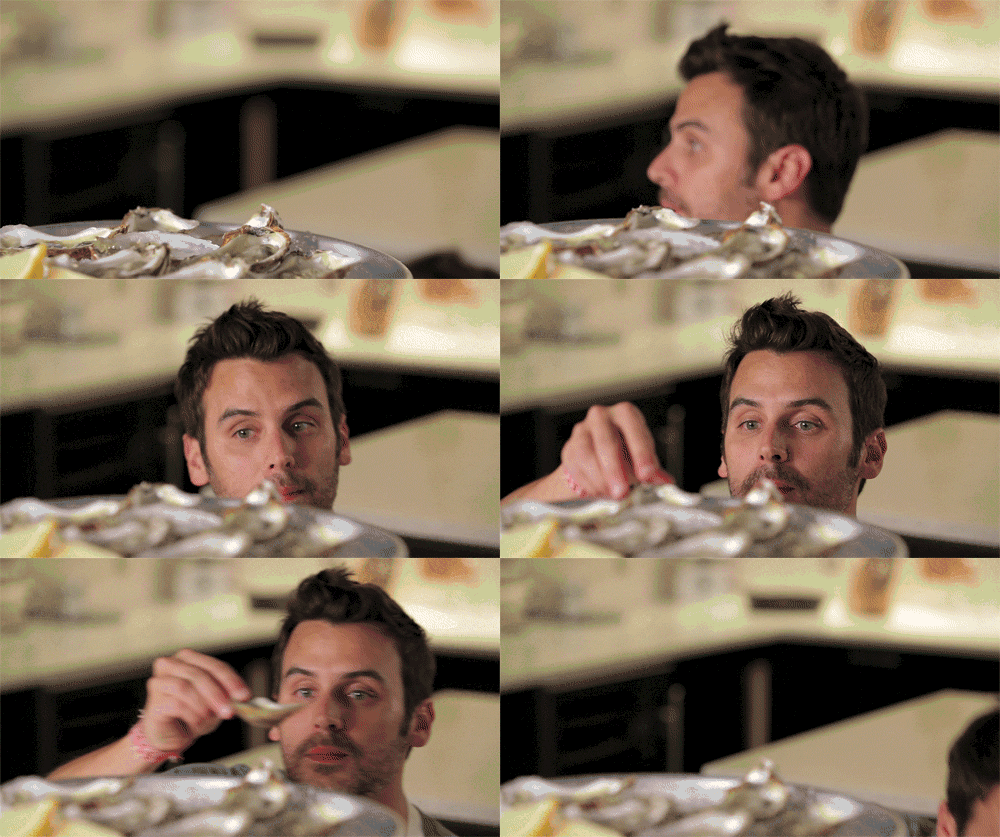
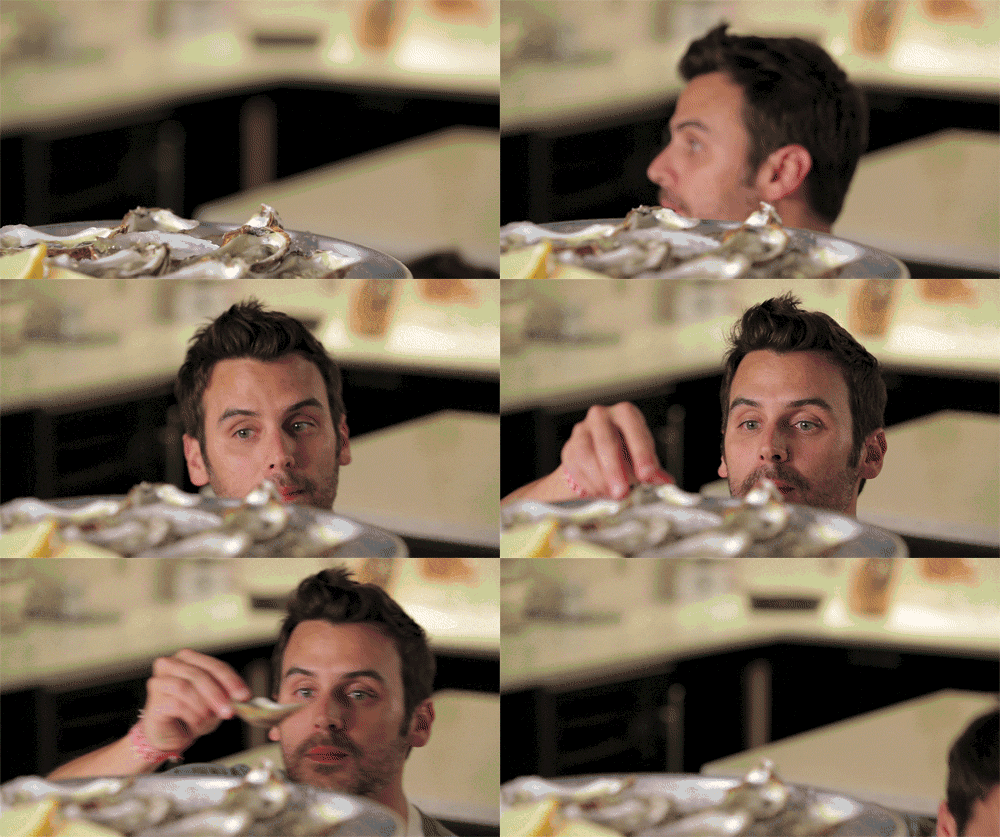
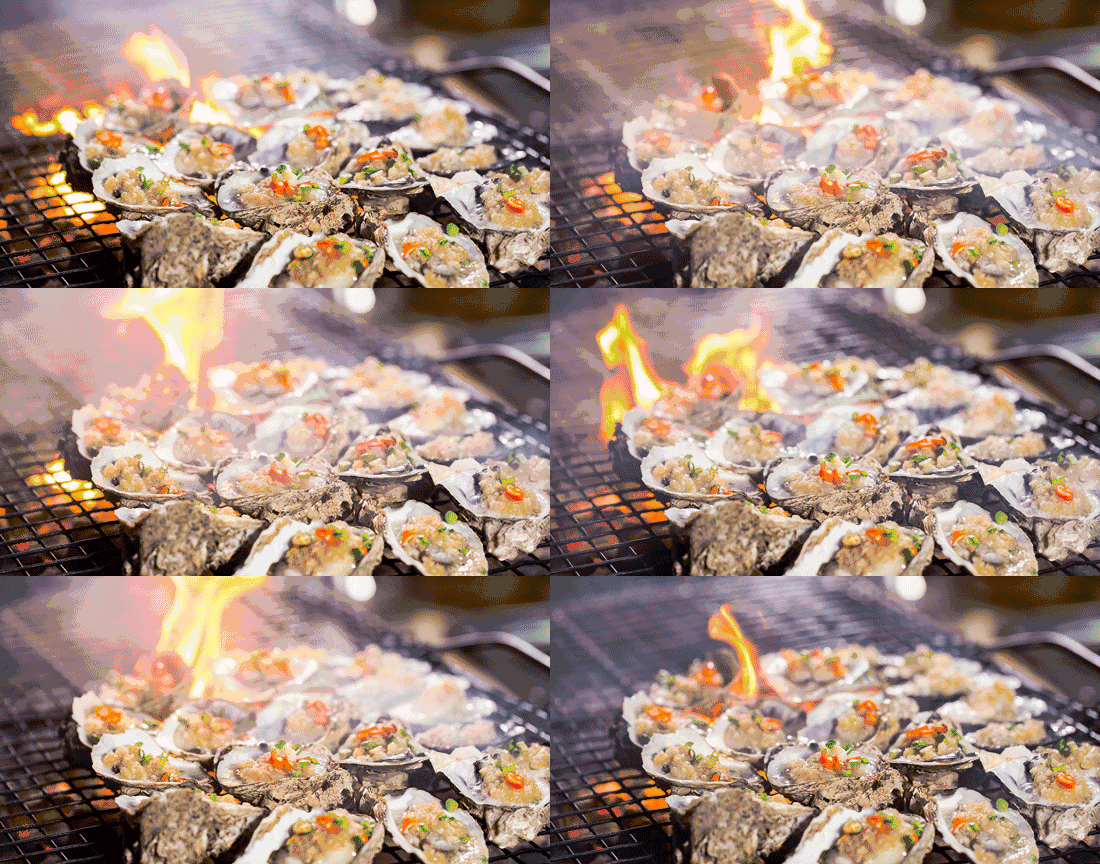
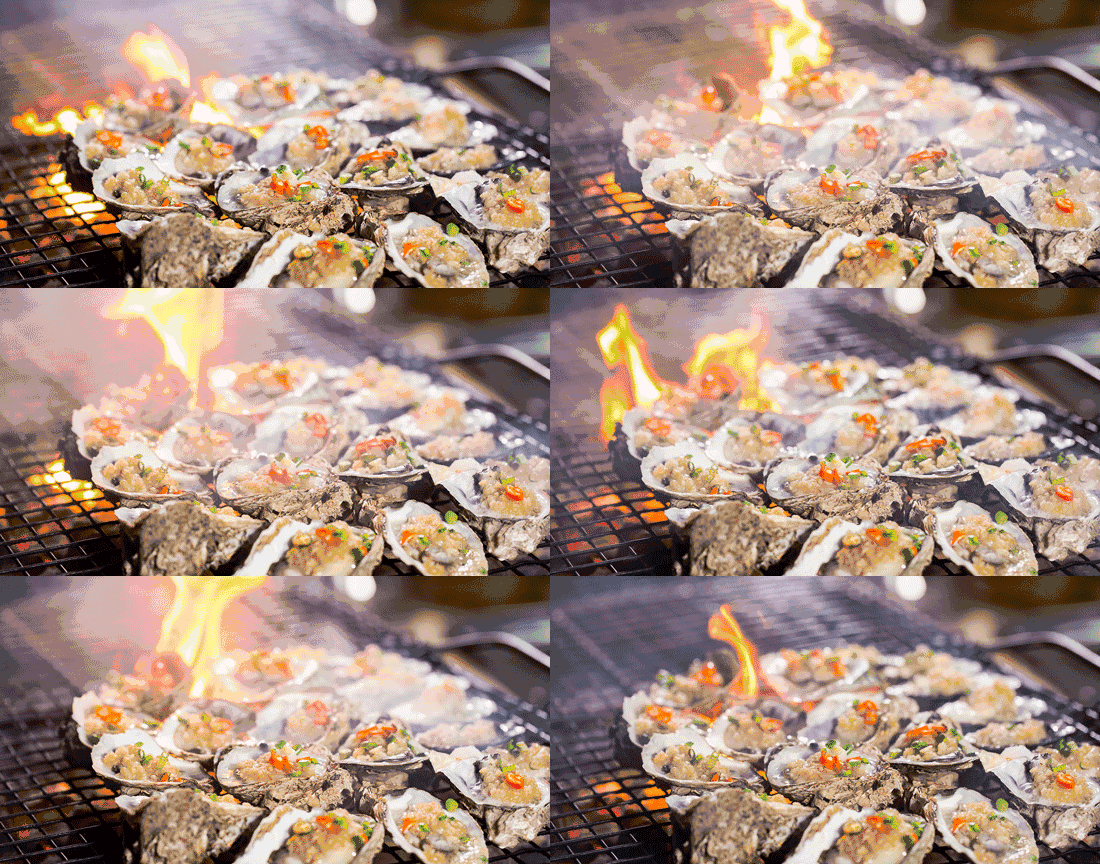
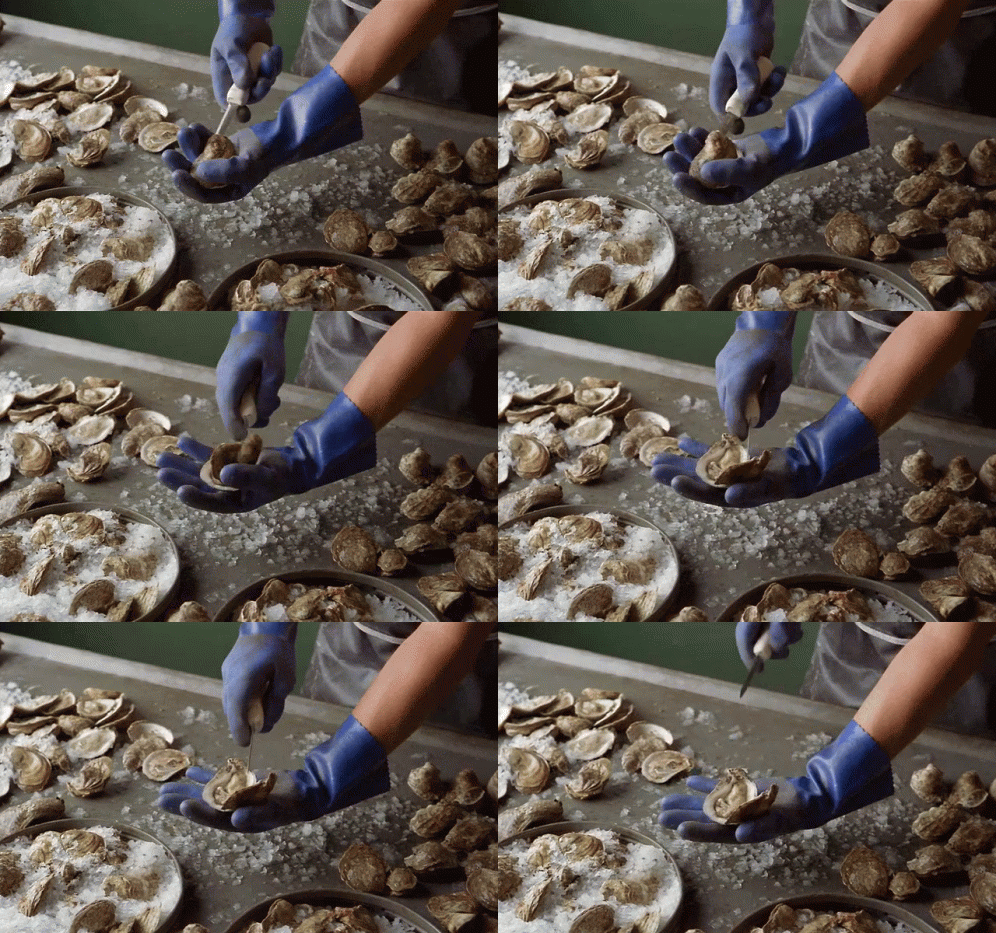
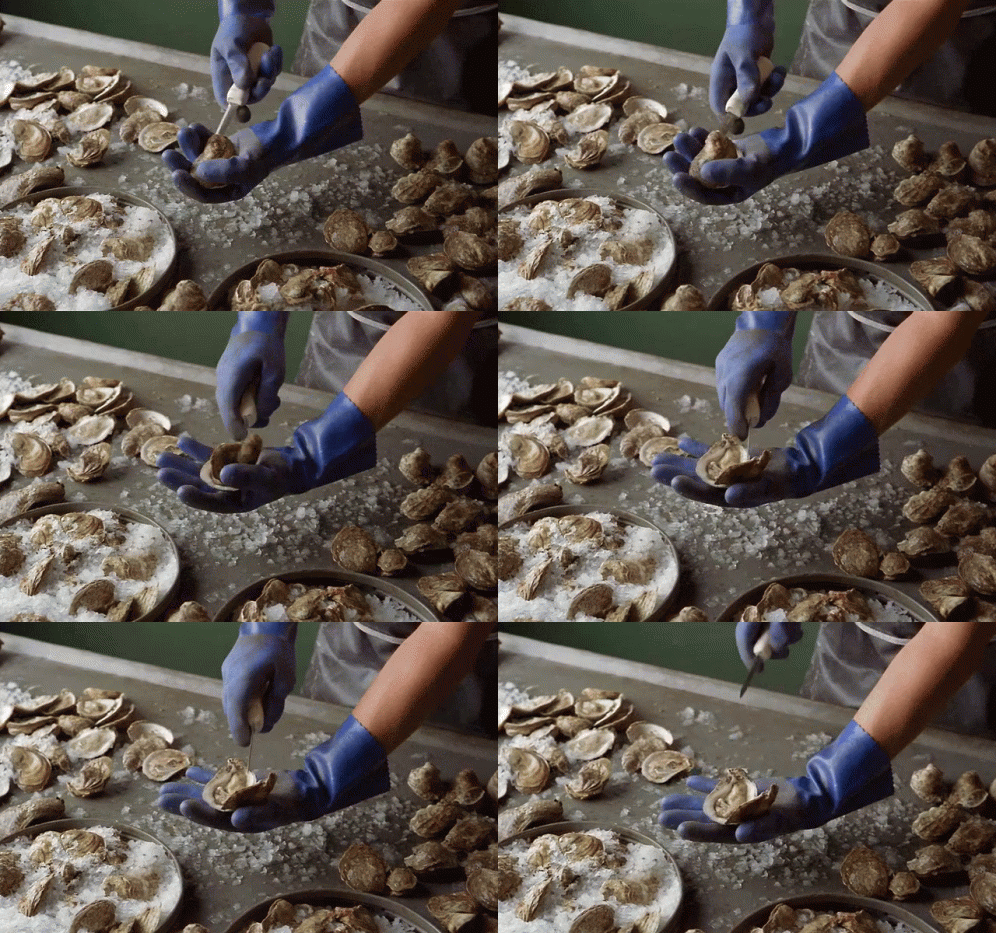
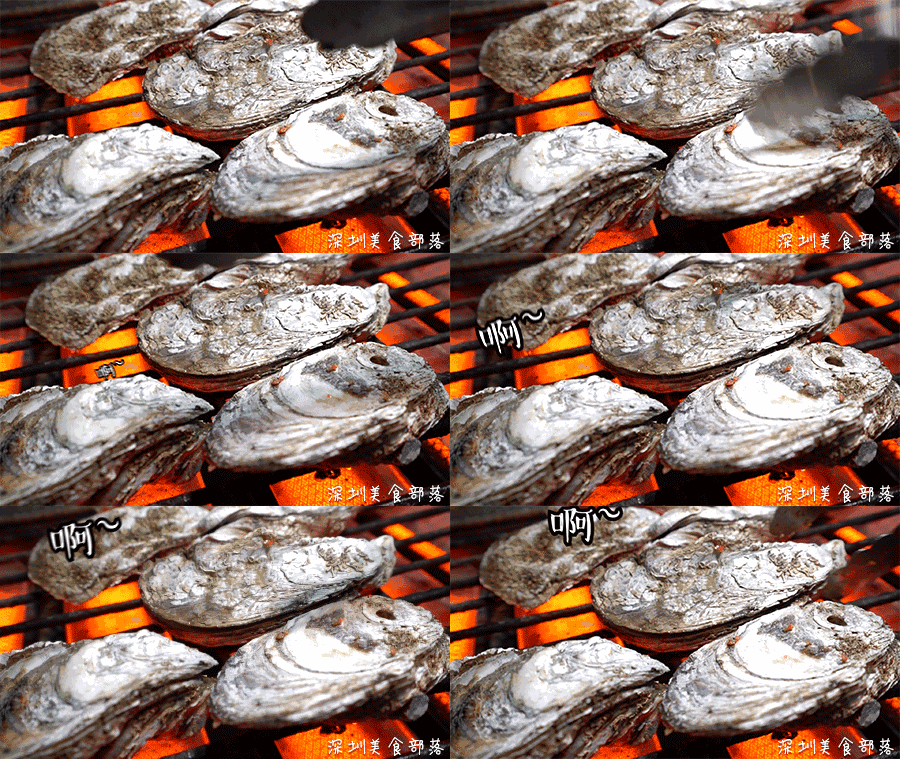
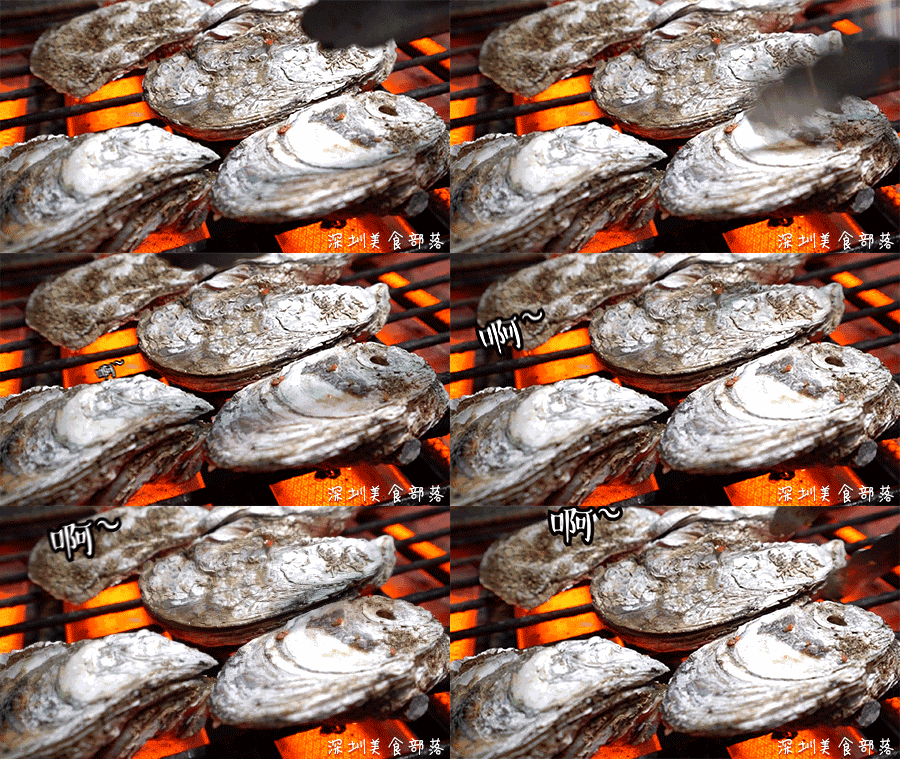
Oysters must be eaten alive, or cooked alive. The shells of live oysters are normally tightly closed or snap shut given a slight tap. If the shell is open, the oyster is dead, and cannot be eaten safely. Cooking oysters in the shell kills the oysters and causes them to open by themselves. Traditionally, oysters that do not open have been assumed to be dead before cooking and therefore unsafe. However, according to at least one marine biologist, Nick Ruello, this advice may have arisen from an old, poorly researched cookbook's advice regarding mussels, which has now become an assumed truism for all shellfish. Ruello found 11.5% of all mussels failed to open during cooking, but when forced open, 100% were "both adequately cooked and safe to eat." Oysters can be eaten on the half shell, raw, smoked, boiled, baked, fried, roasted,stewed, canned, pickled, steamed, or broiled, or used in a variety of drinks. Eating can be as simple as opening the shell and eating the contents, including juice.Butter and salt are often added. In the case of oysters Rockefeller, preparation can be very elaborate. They are sometimes served on edible seaweed, such as brown algae.
Care should be taken when consuming oysters. Purists insist on eating them raw, with no dressing save perhaps lemon juice, vinegar (most commonly shallot vinegar), or cocktail sauce. Upscale restaurants pair raw oysters with a home-made Mignonette sauce, which consists primarily of fresh chopped shallot, mixed peppercorn, dry white wine and lemon juice or sherry vinegar. Like fine wine, raw oysters have complex flavors that vary greatly among varieties and regions: sweet, salty, earthy, or even melon. The texture is soft and fleshy, but crisp on the palate. North American varieties include: Kumamoto and Yaquina Bay from Oregon, Malpeque from Prince Edward Island, Canada, Blue Point from Long Island, New York, and Cape May oysters from New Jersey. Salinity, mineral, and nutrient variations in the water that nurtures them influence their flavor profile.
